The Grief Process: Phases of Grief and Spiritual Guidance
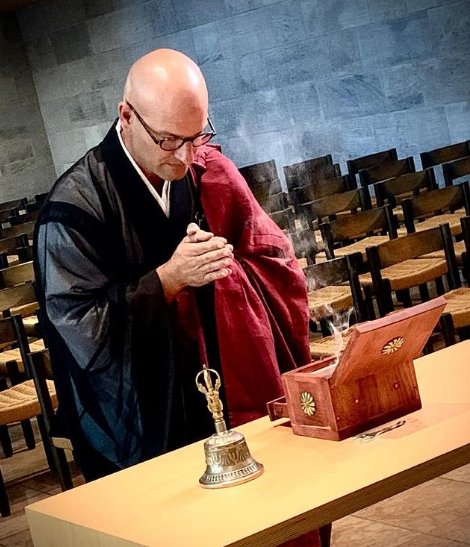
In an hour of silence and farewell, where the veil between life and death grows thin, I accompany you as a free funeral speaker with an open heart and reverent mindfulness. Every death is not only a moment of loss, but a profound reminder and admonition – a spiritual invitation to contemplate one's own existence. As a catholic Zen Master and funeral speaker with a Christian background, I design farewell ceremonies and funerals marked by dignity, symbolic power, and love. Rituals that offer comfort, build bridges between heaven and earth, and honor the deceased in gratitude. My ceremonies blend the clarity of Zen with the depth of Christian wisdom and monastic tradition, making your funeral ceremony a conscious, symbolic, and unforgettable experience – from heart to heart.
The Grief Process: From Farewell to Reflection
The grief process often begins only with the farewell ceremony. Before that, the relatives are usually occupied with the organization of the death – with formalities that demand the mind and heart. Only with and after the funeral does space emerge to reflect on the event and allow the feelings to surface.
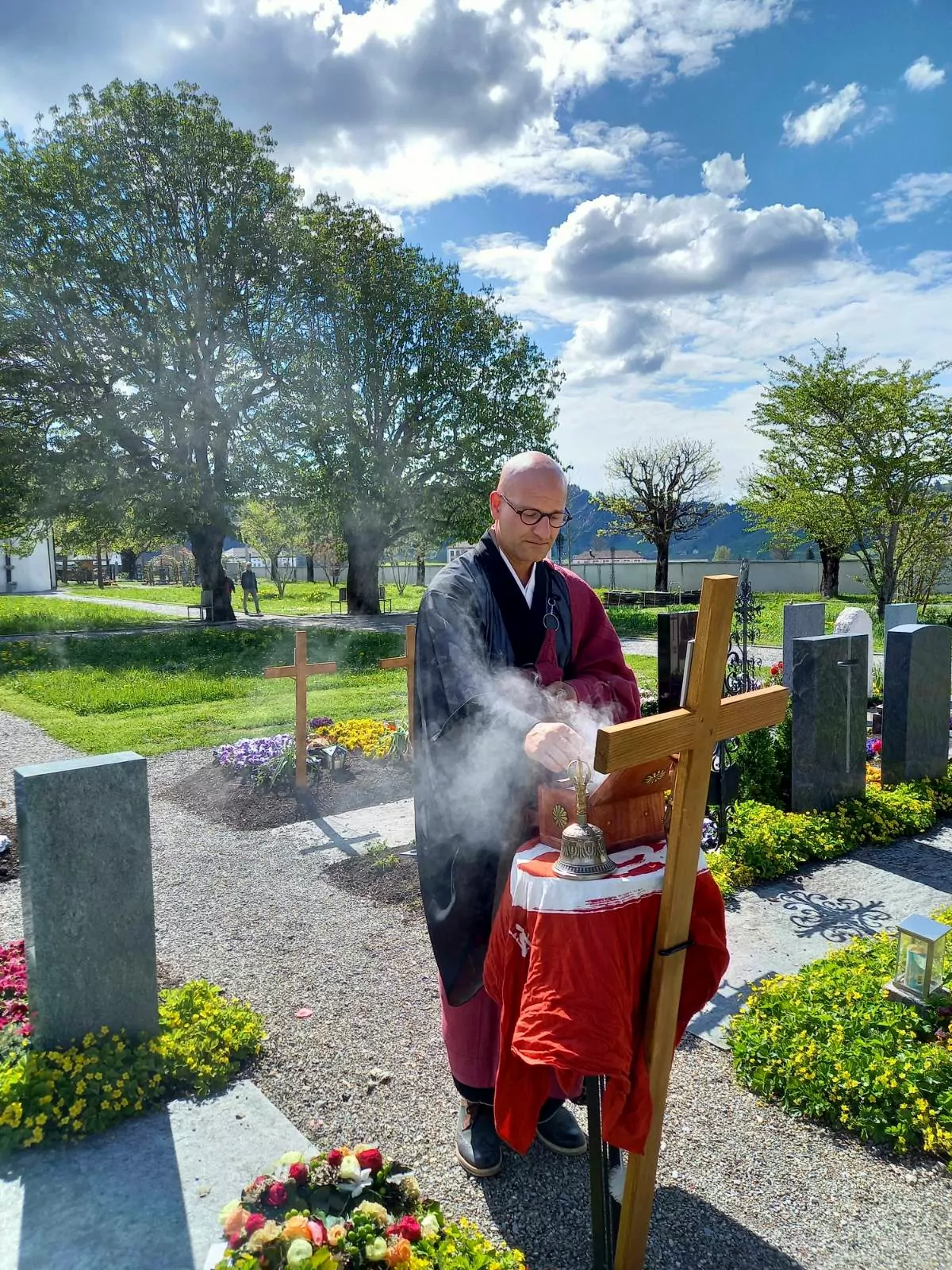
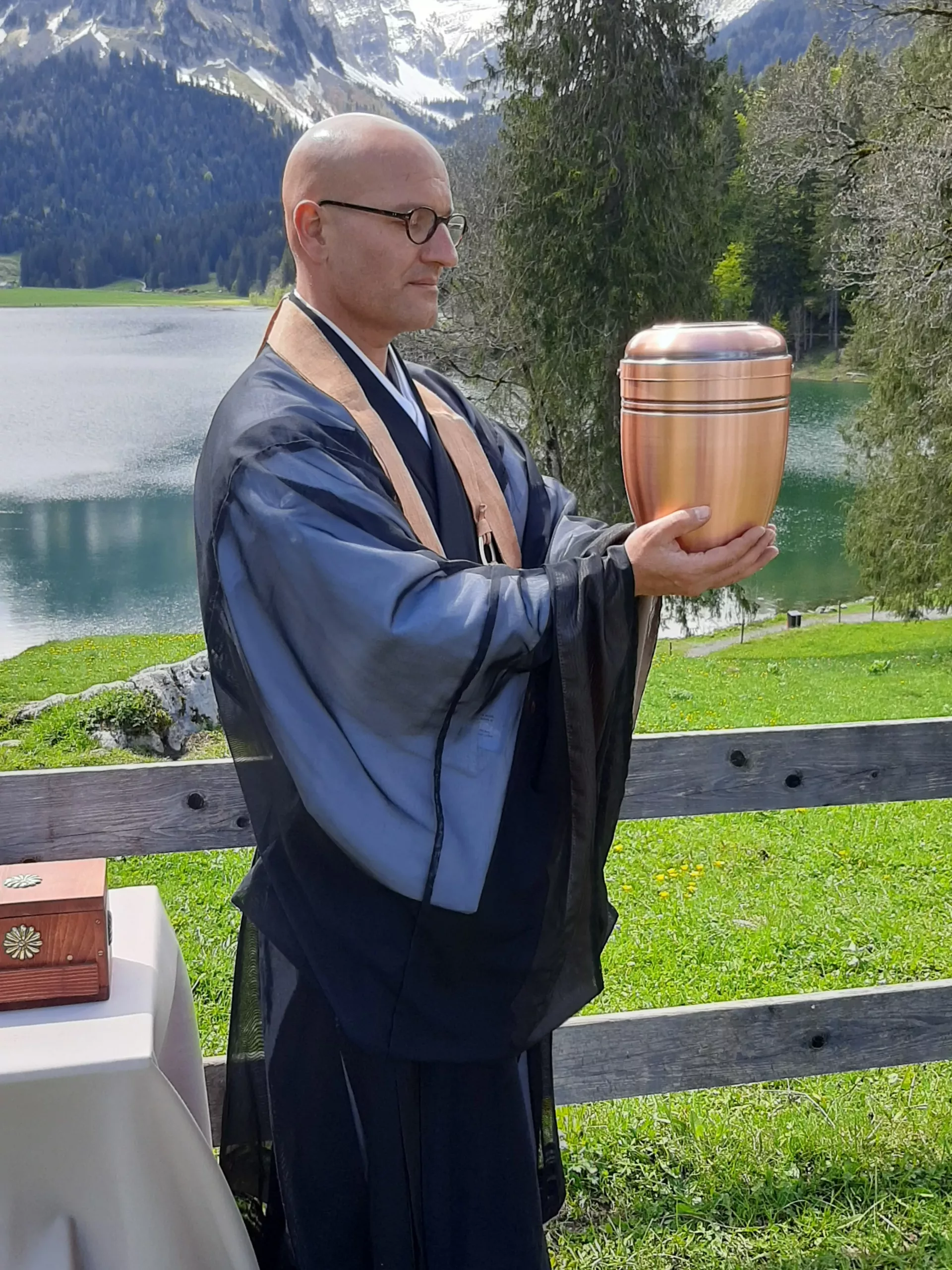
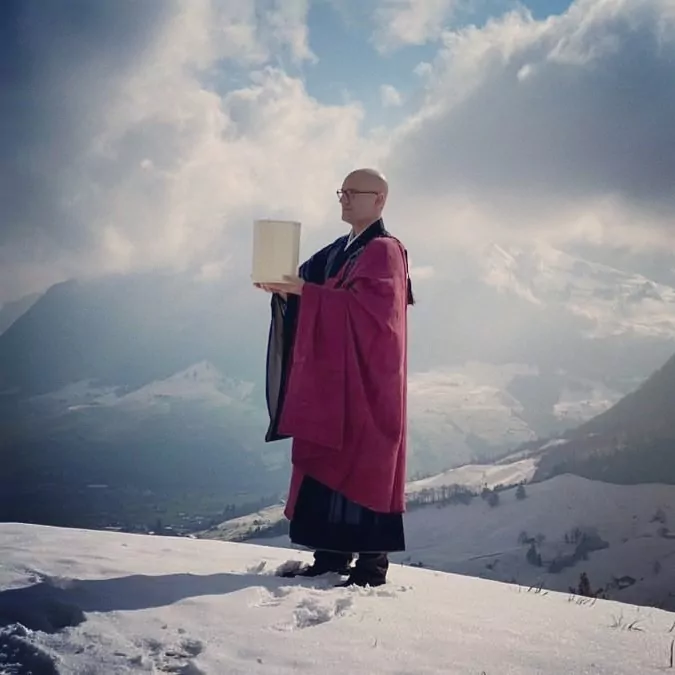
As a funeral speaker, it is my task to find the right words that gently initiate this process. Words that not only console, but nudge the grief process in a positive and healthy direction. In the mystical depth of farewell – whether at the cemetery in Zurich, at a memorial service in a familiar circle, or when scattering ashes in the mountains, by the lake, or in the forest – the ceremony becomes a mirror of the deceased's personality. Relatives of all faiths are welcome; upon request, we interweave symbols and rituals from different traditions so that every mourner finds comfort in their own language of faith.
The grief process is a gift of the soul, a spiritual journey that teaches us to honor life in its transience. Every death admonishes us: Live consciously, take responsibility. In the Christian tradition, this reminds us of the words of the Gospel – "Be watchful, for you know neither the day nor the hour" (Mt 25:13) – while the Zen path invites us to mindfulness in the here and now. Thus, grief guidance becomes a bridge that transforms suffering into wisdom.
The Phases of the Grief Process: A Path of Healing
The grief process unfolds in phases, like waves that wash over us – not linear, but circular, sometimes recurring, always individual. Inspired by spiritual wisdom and the Christian hope of resurrection, I accompany these stages as a funeral speaker with rituals that offer comfort and orientation. The classic phases, as described by Elisabeth Kübler-Ross, invite us to symbolically embrace the pain:
- Denial: In this first phase of the grief process, the soul protects us from overwhelming pain. The loss seems unreal, like a dream. As a funeral speaker, I help here with gentle words and rituals to touch the ground of reality – for example, with a candle ceremony that symbolizes the light of the deceased and initiates the transition.
- Anger: The pain erupts as rage – toward God, fate, or oneself. Why now? In grief guidance, I integrate elements of Zen to hold this anger mindfully, and Christian prayers that invite forgiveness. A funeral can become a space of catharsis here, where anger is released in prayers or symbolic actions like throwing flower petals.
- Bargaining: We search for ways to undo the inevitable – "If only I had..." This phase of the grief process is a spiritual quest for meaning. As a funeral speaker, we weave into the farewell ceremony elements that emphasize gratitude for what was learned, and recall monastic wisdom: Everything has its place in the grand fabric of life.
- Depression: The depth of grief envelops us, a valley of shadows. Here, the grief process is most intense; the loss becomes tangible. In my ceremonies, I offer comfort through mystical elements – such as reciting Psalms or Zen meditations – that lead the mourners into the arms of the community and the Divine.
- Acceptance: Finally, peace returns, a new order emerges. The grief process culminates in wisdom: The deceased lives on in our hearts. As a funeral speaker, I conclude the funeral with a blessing ritual that symbolizes this acceptance – for example, by planting a tree or scattering ashes in nature, to honor the cycle of life.
These phases of the grief process are not a rigid scheme, but a flowing path supported by grief guidance. In Switzerland, with its picturesque cemeteries and spiritual places, a funeral can frame these phases with particular dignity.
Child Funeral: The Most Painful Farewell and Its Grief Process
All parents dread the day they must carry their child to the grave. A child funeral is a deep tear in the soul, where the grief process must be accompanied with particular gentleness. As a funeral speaker, I design such funerals with empathetic softness, integrating child-friendly symbols like candles, flowers, or personal rituals that pay homage to the little souls. The pain is immeasurable, yet in spiritual depth, we find comfort: The child, a spark of the Divine, returns to the arms of the Eternal. The grief process here is a healing journey through darkness toward light, where questions of why lead to deeper acceptance.
The Meaning of Life: A Question Renewed by Every Funeral
With every funeral, the question of the meaning of life is brought back to consciousness. Who is next? When will I die? Why all the efforts and suffering if death awaits at the end? These questions, symbolic of the mystery of life and death, invite us to look deeper. As a funeral speaker with Zen and Christian background, I remind in my speeches: Life is a pilgrimage, a preparation for eternity. Every death is an admonition to take responsibility – for our actions, our being, our relationships. In the Zen spirit: "Live as if this were your last day." In Christian wisdom: "Whatever you do, do it out of love" (1 Cor 16:14). Thus, the grief process becomes an opportunity to reorder life anew.
Responsibility in the Grief Process: A Personal Reflection
At every funeral ceremony, as a funeral speaker, I ask myself: Is my doing and being truly meaningful? Every death is a reminder and admonition whether I am taking the greatest possible personal responsibility in my life. The grief process admonishes us all: Have we done enough? Could we have helped? What did we do wrong? Yet in spiritual depth lies the answer: Not guilt, but grace. The grief process is a path of forgiveness – to oneself and others – a gift that creates order and opens the heart.
A touching testimony reaches me from Josef K. (85) from Romanshorn:
Dear Abbot Reding,
It has been a few months since the funeral of my daughter. Last year, I had to bury my wife, and now my daughter as well. Both took their own lives. Often, of course, the question arose why this all happened to me. Whether I had done too little? Whether I could have helped? What did I do wrong? At first, I didn't want to come to the funeral at all and didn't know if I could endure it.
But now I am very glad and grateful. For through the funeral ceremony and your words at the farewell service, I was able to place everything in a larger context and slowly bring some order back into my life. I now experience the grief process as a great gift. I want to thank you from the bottom of my heart for your work.
Warm regards, Josef K. (85) from Romanshorn
Such words touch deeply and show: Grief guidance through a funeral speaker can transform the grief process into a healing experience.
If you are planning a funeral or funeral ceremony – whether a child funeral, an alternative burial, or a spiritual memorial service – please contact me. Let us create a ceremony together that offers comfort and honors life. In dignity and mindfulness, for all faiths.