Death – Phases of mourning and the mourning process – Coping with Death
When someone we love dies, the order of our life is shaken to its foundations. What was once familiar becomes strange; what was once secure becomes fragile. Grief is not an illness to be cured but a journey — a slow return into a new form of inner order.
The loss of a beloved person forces us to orient ourselves anew. To grieve means to allow the heart, the body and the spirit to make space for what has happened. It requires time, patience and compassion with oneself.
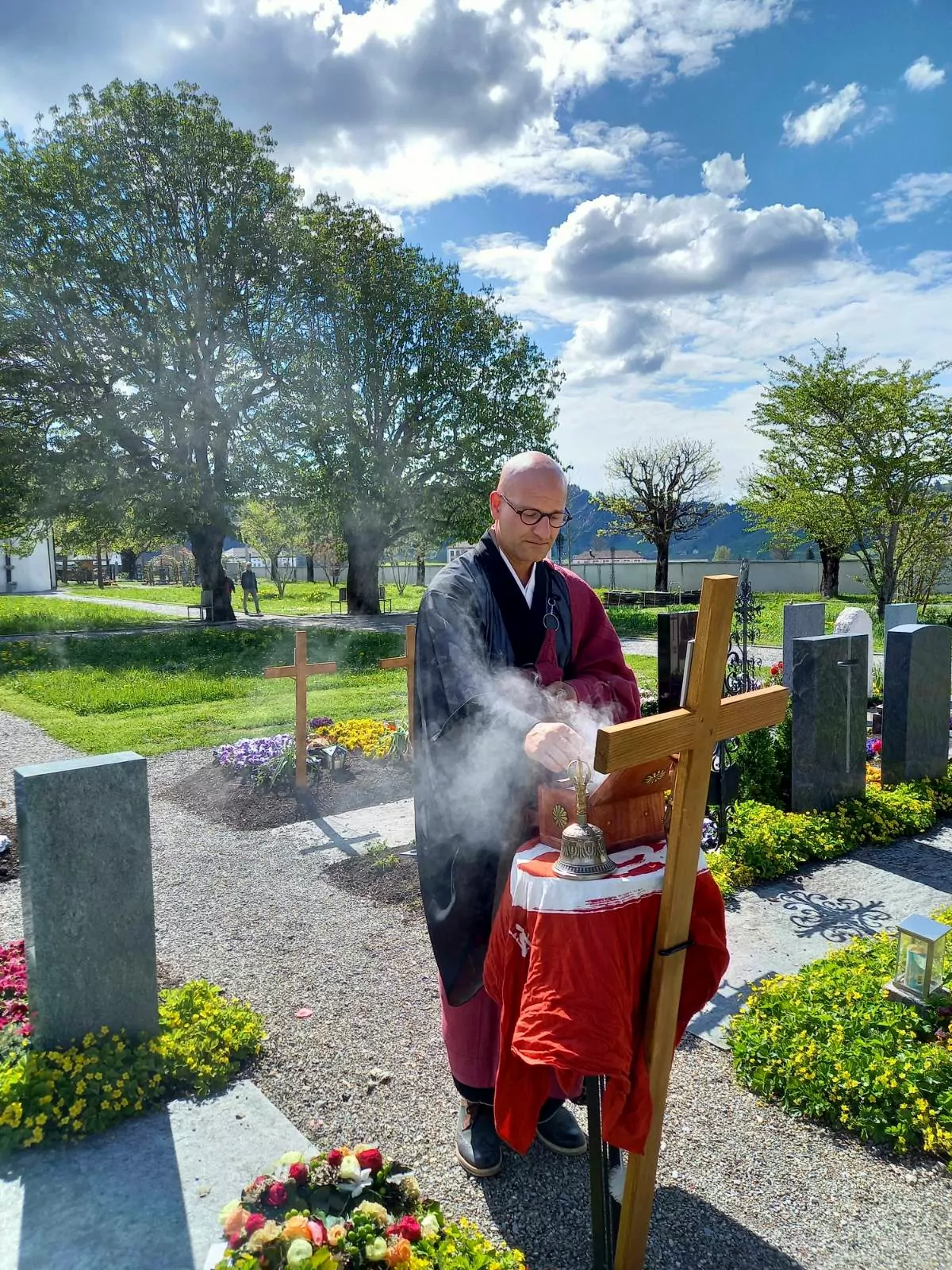
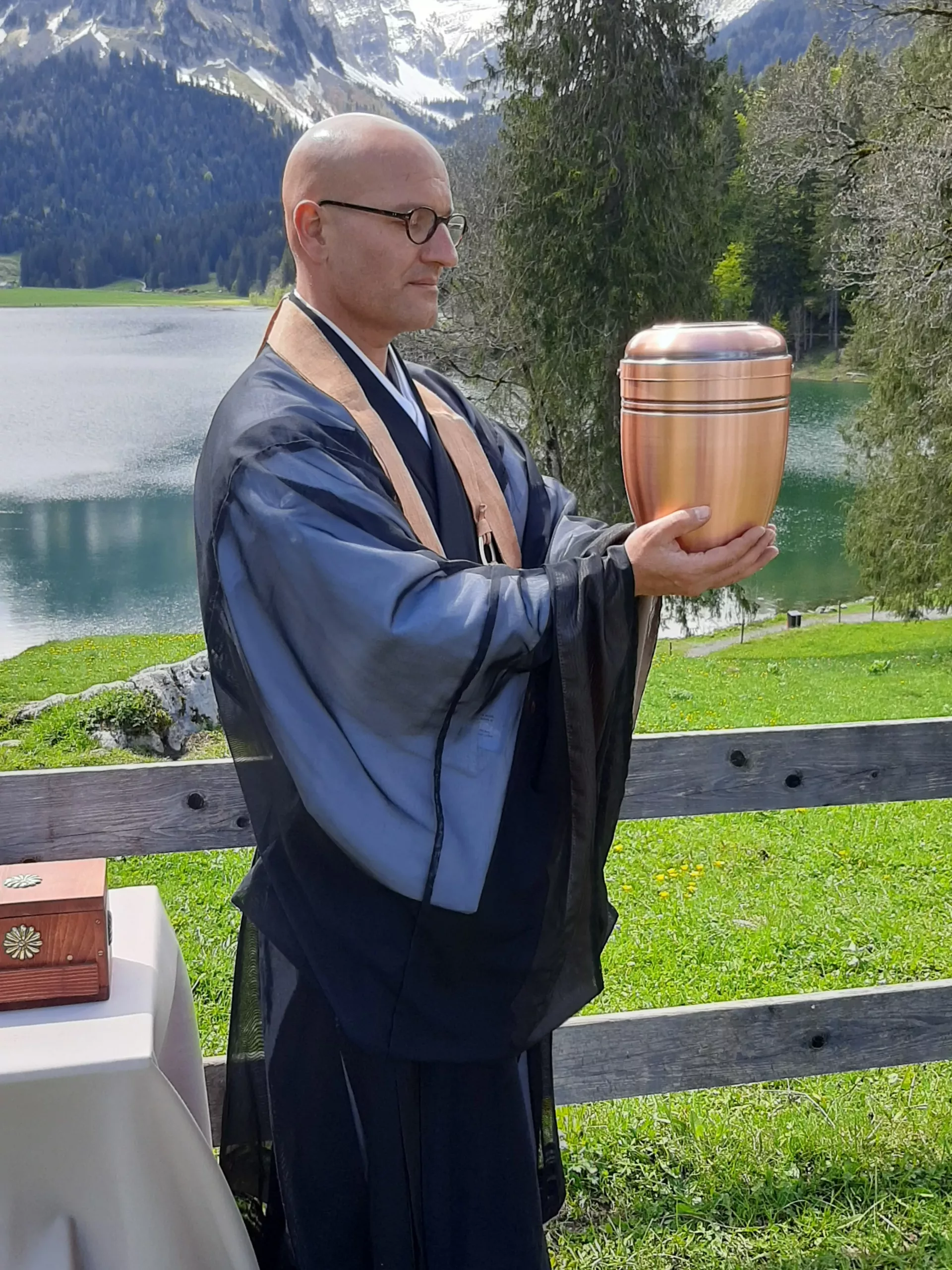
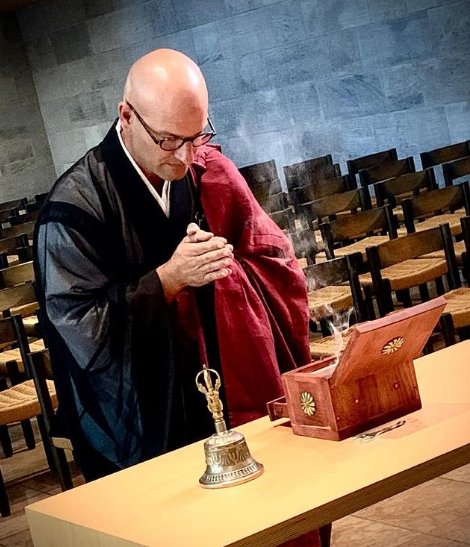
Master Reding accompanies families not only during the funeral ceremony but also in the weeks and months that follow. Through rituals, prayers, memorial ceremonies and quiet spiritual support, grief becomes visible — and thus becomes able to heal.
The Phases of the Grieving Process
1. Denial and Shock
In the first hours and days after death, everything feels unreal. One expects to hear the footsteps of the departed, to see their silhouette at the door, to hear their voice in the next room.
Many describe this phase as standing in a fog — numb, stunned, unable to grasp what will never return. This is a natural protective response of the heart.
Duration: hours, days, sometimes several weeks.
2. Emerging Emotions
When the initial numbness dissolves, the true weight of grief rises to the surface. Pain, sorrow, helplessness — and even anger — may break through. Sometimes the anger is directed inward, sometimes toward fate, sometimes toward the unfairness of life. Guilt often appears as well: Why am I still here when the one I loved had to go?
This is a vulnerable phase, yet it is essential. Anything that is expressed, felt, or cried out does not harden within us.
Duration: weeks, months, sometimes years.
3. Searching and Letting Go
In this stage, the grieving person begins an inner dialogue with the deceased. They visit places of memory, look at old photographs, reread letters, listen to familiar music, and speak silently to the one who has gone. The presence of the departed is still tangible — in a gesture, a fragrance, a melody, a sudden memory.
This is the phase where mourning transforms into conscious farewell. It does not mean forgetting; it means allowing the separation to take shape.
Duration: weeks, months or years.
4. Reorientation
Slowly — without one clear moment of transition — peace begins to return. Not all pain disappears, but it becomes softer, quieter, familiar. The beloved person becomes an inner companion, not a wound. The heart begins to carry gratitude instead of despair. New possibilities open — new plans, small steps, renewed courage.
Grief does not end; it changes its form. From heavy darkness into a gentle remembrance.
Duration: individual and deeply personal.
Accompaniment After Death
Master Reding offers:
- Memorial ceremonies
- Anniversary rituals
- Blessings at the grave
- Rites of reorientation
- Personal spiritual support
These rituals allow grief to be expressed outwardly, so it does not remain locked inside as silent pain. Grief that is shared and held becomes a path toward healing.
Prayer and Meditation – Comfort in Times of Loss
There flutters a little blue butterfly,
driven by the wind.
A pearly shimmer glitters, trembles — and fades.So brief, so light,
so quickly gone —
I saw happiness waving to me,
glittering, trembling — and passing away.*
Blessings on the final journey. Rest in peace.